
Ultimate Post Workout Nutrition Guide: Carb Myths
Most gym-goers get post workout nutrition wrong. Here's the science-backed truth on protein, carbs, and timing — no myths, just results.
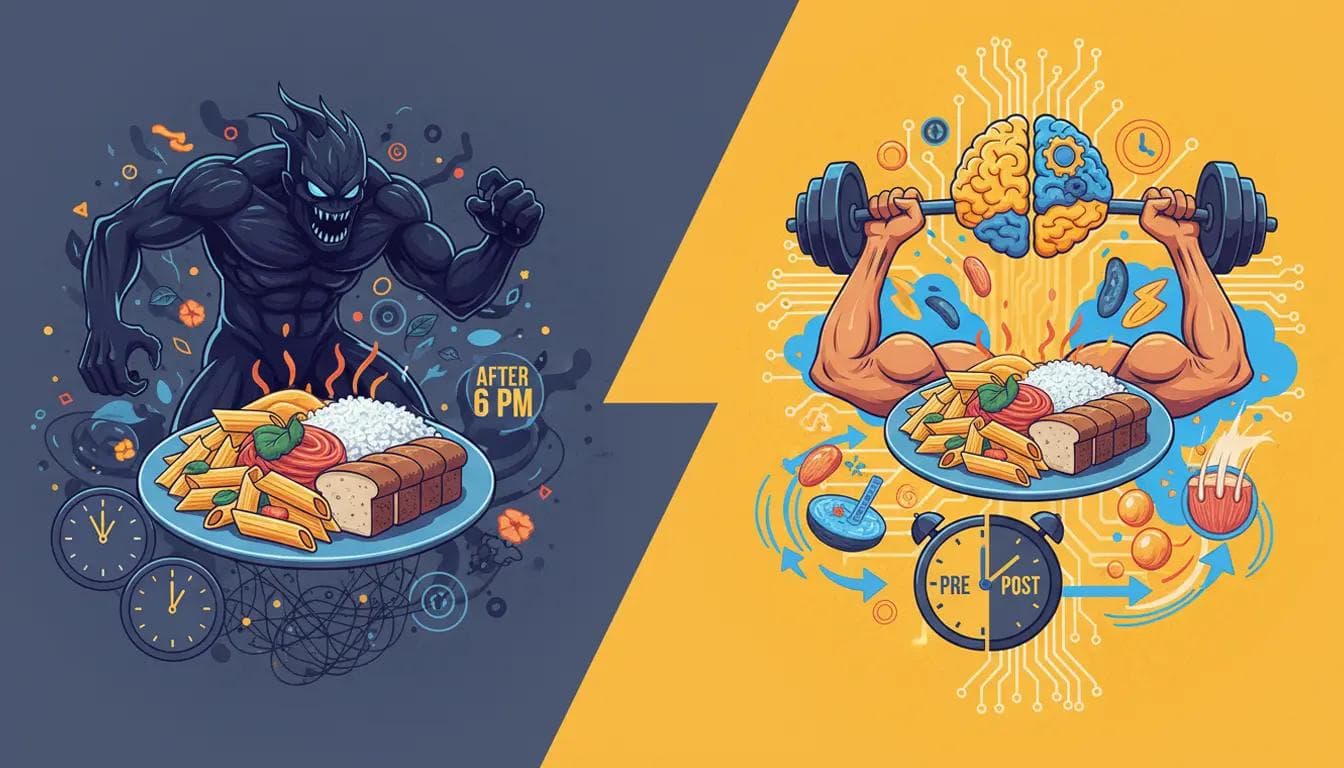
# Ultimate Post Workout Nutrition Guide: What to Eat, When, and Why It Actually Matters
Over 60% of gym-goers leave their workout without eating anything for hours — and then wonder why their results have stalled. If you've ever finished a tough session and thought, "Do I even need to eat right now?" — this post workout nutrition guide is exactly what you need.
Post workout nutrition is one of the most searched, most debated, and most misunderstood topics in fitness. The myths are everywhere. The advice is contradictory. And the window for getting it right is shorter than most people think.
This guide cuts through the noise with science-backed, actionable advice — whether your goal is fat loss, muscle gain, or just recovering faster so you can train again tomorrow.
---
The #1 Rule Before We Talk Timing: Total Calories Still Win
Before diving into post workout nutrition strategies, let's establish the hierarchy.
Total daily calories and protein intake are responsible for roughly 90% of your results. Nutrient timing — including what you eat after a workout — is the remaining 10%. It matters, but only after you've nailed the fundamentals.
If you're in a calorie deficit, you will lose fat. If you're eating enough protein, you will preserve (and build) muscle. Timing optimizes those outcomes — it doesn't replace them.
Think of it like this: post workout nutrition is the fine-tuning on a well-built engine. You wouldn't tune a broken engine first.
beginners-nutrition-guide
---
What Actually Happens to Your Body After a Workout?
To understand why post workout nutrition matters, you need to understand what a workout actually does to your body.
When you train — whether that's lifting weights, running, or a HIIT session — several things happen simultaneously:
- Muscle glycogen is depleted. Glycogen is the stored form of carbohydrates in your muscles. It's your primary fuel during exercise. After a hard session, those stores are significantly reduced.
- Muscle protein is broken down. Resistance training creates micro-tears in muscle fibers. This is a normal, necessary process — but it means your body is in a net catabolic (breakdown) state immediately after training.
- Cortisol rises. This stress hormone spikes during exercise. It's useful during the workout, but elevated cortisol post-training can slow recovery if you don't eat.
- Insulin sensitivity increases. This is the good news. Your muscles are primed to absorb nutrients — especially carbohydrates and amino acids — more efficiently in the post workout window.
The goal of post workout nutrition is to flip the switch: from breakdown to rebuilding. You do that with the right combination of protein and carbohydrates.
---
How Much Protein Do You Need After a Workout?
Protein is the non-negotiable cornerstone of post workout nutrition. Here's what the research actually says:
The optimal post workout protein dose is 20–40 grams of high-quality protein.
More specifically:
- For most people under 180 lbs: 20–25g is sufficient to maximally stimulate muscle protein synthesis.
- For larger individuals or those over 40: 30–40g may be more effective, as older muscles are slightly less sensitive to leucine (the key amino acid that triggers muscle building).
Best Post Workout Protein Sources (Ranked by Speed of Absorption)
- Whey protein isolate — Fastest absorbing. Ideal if you train fasted or need a quick option. Hits peak blood amino acids in about 60–90 minutes.
- Whole eggs (2–3 eggs) — Excellent amino acid profile. Slightly slower than whey but highly bioavailable.
- Greek yogurt (1 cup / ~170g) — ~17g protein, plus carbs and probiotics. Great real-food option.
- Chicken breast (150g cooked) — ~45g protein. Slower to digest but perfectly effective within the broader post workout window.
- Cottage cheese (1 cup) — ~25g protein. High in casein, which is slower-digesting — still valuable but not the fastest option.
- Canned tuna (1 can / 142g) — ~34g protein. Cheap, portable, effective.
Key takeaway: The source matters less than hitting your protein target. Whole food or shake — both work. Choose what you'll actually eat consistently.
---
Do You Need Carbs After a Workout? (The Honest Answer)
This is where post workout nutrition gets controversial. Let's settle it.
Yes — carbohydrates after a workout are beneficial, especially if you train hard or frequently. Here's why:
Carbs replenish muscle glycogen. The faster you replenish glycogen, the faster you recover — and the better you'll perform in your next session. If you train once a day or less, you have plenty of time to replenish glycogen through your normal daily eating. But if you train twice a day, or do back-to-back intense sessions, post workout carbs become critically important.
Post Workout Carbs: Who Needs Them Most?
High priority for post workout carbs:
- Athletes training 2x per day
- Endurance athletes (runners, cyclists, swimmers)
- Anyone doing high-volume resistance training (4+ days/week)
- People in a muscle-building (bulking) phase
Lower priority for post workout carbs:
- Recreational gym-goers training 3x/week or less
- People focused purely on fat loss in a moderate deficit
- Those doing low-intensity exercise (walking, yoga, light cardio)
How Many Carbs After a Workout?
A practical starting point:
- Muscle gain goal: 0.5–1g of carbohydrates per kg of bodyweight post workout. For a 75kg person, that's 37–75g of carbs.
- Fat loss goal: 20–40g of carbs post workout is sufficient to support recovery without disrupting your deficit.
Best Post Workout Carb Sources
- White rice (fast-digesting, easy on the stomach)
- Banana (portable, ~27g carbs, plus potassium)
- Oats (slower digesting — better for less urgent recovery)
- Sweet potato (nutrient-dense, ~26g carbs per medium potato)
- Rice cakes (low fat, fast carbs — bodybuilder staple for a reason)
- Fruit smoothie (pairs well with a protein shake)
---
The Post Workout Anabolic Window: Real or Myth?
You've probably heard you need to eat within 30 minutes of finishing your workout or your gains will disappear. This is one of the most persistent myths in fitness.
The truth: The anabolic window is real, but it's much wider than 30 minutes.
A landmark meta-analysis published in the Journal of the International Society of Sports Nutrition found that the post workout window for muscle protein synthesis remains elevated for up to 4–6 hours after training — not 30 minutes.
However, there's an important nuance:
- If you trained fasted (no meal 3–4 hours before your workout), eating sooner matters more. Aim to eat within 30–60 minutes.
- If you had a pre-workout meal 1–2 hours before training, your body is still processing those nutrients. You have a comfortable 2-hour window post workout.
The practical rule: Eat a proper post workout meal within 2 hours of finishing your session. Don't stress about the exact minute — stress about the quality of what you eat.
pre-workout-nutrition-guide
---
Busting the 5 Biggest Post Workout Nutrition Myths
Myth 1: "Eating Carbs at Night Will Make You Fat"
The myth: Your metabolism slows down at night. Carbs eaten after 6 PM go straight to fat storage.
The fact: Completely false. Your metabolism runs 24/7. In fact, your body does significant repair and muscle-building work while you sleep — which requires energy, including carbohydrates.
Studies comparing people who ate their daily carbs in the morning versus the evening found no significant difference in fat loss outcomes when total calories were equal.
Bonus: Carbs in the evening can actually improve sleep quality. Carbohydrates help the brain produce serotonin and melatonin — your relaxation and sleep hormones. A bowl of rice or a sweet potato at 8 PM is not your enemy.
Verdict: False. If it fits your daily calories, evening carbs are fine — and may even help your recovery.
---
Myth 2: "You Must Drink a Protein Shake Immediately After Training"
The myth: Liquid protein is mandatory post workout. Solid food is too slow.
The fact: Protein shakes are convenient, not mandatory. If you can eat a balanced whole-food meal within 1–2 hours of training, a shake is completely unnecessary.
Whole food protein sources — chicken, eggs, fish, Greek yogurt — are digested and absorbed effectively. The difference in muscle protein synthesis between a shake and a chicken breast, when consumed within a reasonable window, is negligible for most people.
Use a shake when: You're short on time, you have no appetite post workout, or you're training early in the morning before a meal is practical.
Verdict: False. Shakes are a tool, not a requirement.
---
Myth 3: "Fat After a Workout Kills Your Gains"
The myth: Dietary fat slows digestion and blunts the insulin response, reducing muscle protein synthesis post workout.
The fact: While fat does slow gastric emptying (the rate food leaves your stomach), research shows this has minimal impact on muscle protein synthesis when protein intake is adequate.
A study in the American Journal of Clinical Nutrition found that whole milk (which contains fat) stimulated more muscle protein synthesis post workout than fat-free milk — likely due to its higher calorie and leucine content.
Verdict: Mostly false. Don't go overboard with fat post workout (a 50g fat meal will slow digestion noticeably), but a moderate amount — an avocado, some nut butter, full-fat yogurt — is perfectly fine.
---
Myth 4: "You Need Supplements to Recover Properly"
The myth: BCAAs, glutamine, creatine, and other supplements are essential for post workout recovery.
The fact: If you're eating enough total protein from quality sources, BCAAs and glutamine are largely redundant. Your food already contains them.
The one exception: Creatine monohydrate has strong evidence for improving strength and power output. Post workout is a fine time to take it — but so is any other time of day. Consistency matters more than timing.
Verdict: Mostly false. Whole food nutrition covers the vast majority of your recovery needs. Creatine is worth considering. The rest are largely marketing.
---
Myth 5: "Fasting After a Workout Increases Fat Burning"
The myth: Staying in a fasted state after training keeps fat oxidation elevated and maximizes fat loss.
The fact: While fat oxidation is elevated during fasted training, not eating after a workout increases muscle protein breakdown and can impair recovery — especially for resistance training.
For fat loss, the priority is your overall calorie deficit across the day. Skipping your post workout meal doesn't meaningfully increase fat loss — but it does increase muscle loss risk.
Verdict: False for most people. Eat after your workout. Protect your muscle. Your calorie deficit does the fat-burning work.
---
A Simple Post Workout Nutrition Framework (The 3-Part Formula)
Here's a proprietary framework we call the P-C-H Formula for post workout nutrition:
P = Protein (20–40g) Always the anchor. Non-negotiable regardless of your goal.
C = Carbohydrates (20–75g depending on goal) Scale up for muscle gain and high-frequency training. Scale down for fat loss or low-intensity sessions.
H = Hydration (16–24 oz / 500–700ml of water) You lose 1–2% of body weight in sweat during a hard session. Even mild dehydration impairs muscle protein synthesis and recovery. Rehydrate before you eat.
Real-World Post Workout Meal Examples
For muscle gain:
- 150g grilled chicken breast + 1 cup white rice + steamed broccoli
- Greek yogurt parfait with 1 cup yogurt + 1 banana + 30g granola
- Protein shake (40g whey) + 1 large banana + handful of rice cakes
For fat loss:
- 3 scrambled eggs + 1 slice whole grain toast + salsa
- 1 cup cottage cheese + 1/2 cup berries
- Protein shake (25g whey) + 1 medium apple
For endurance athletes:
- 2 cups chocolate milk (yes, really — it's a well-researched recovery drink)
- Smoothie: 1 scoop whey + 1 banana + 1 cup oat milk + 1 tbsp honey
- Turkey and avocado wrap on a whole grain tortilla
---
Post Workout Nutrition for Specific Goals: Fat Loss vs. Muscle Gain
Fat Loss Post Workout Nutrition
- Prioritize protein to preserve lean muscle in a deficit
- Keep carbs moderate (20–40g) — enough to support recovery, not excess
- Total calories matter most — your post workout meal should fit your daily target
- Don't skip the meal — muscle loss in a deficit accelerates without adequate protein timing
Muscle Gain Post Workout Nutrition
- Maximize protein (30–40g) to drive muscle protein synthesis
- Increase carbs (50–75g+) to replenish glycogen and create an anabolic environment
- Don't fear calories — a slight surplus supports muscle growth
- Eat within 2 hours — the window matters slightly more when you're training hard and frequently
---
The Mental Side of Post Workout Nutrition: Consistency Over Perfection
Here's something most post workout nutrition guides won't tell you: the best plan is the one you'll actually follow.
If obsessing over your post workout meal is causing stress, decision fatigue, or disordered eating patterns — step back. The difference between eating 25g of protein at 30 minutes post workout versus 60 minutes is negligible. The difference between eating nothing and eating something is significant.
Build a routine. Prep your meals. Keep a protein shake in your gym bag for busy days. Make it easy.
And on the days when motivation is low and the routine feels hard — a visual reminder of your goals can make a real difference. Consider using a motivational wallpaper generator to turn your nutrition and fitness goals into a daily phone or desktop wallpaper. Small environmental cues like this are backed by behavioral psychology as effective habit anchors.
habit-building-for-fitness
---
Quick Reference: Post Workout Nutrition Do's and Don'ts
Do:
- Eat 20–40g of protein within 2 hours of training
- Include carbohydrates if you train hard or frequently
- Rehydrate with 16–24 oz of water immediately post workout
- Prioritize whole foods when possible
- Adjust carb intake based on your specific goal
Don't:
- Skip your post workout meal in hopes of burning more fat
- Stress about eating within an exact 30-minute window
- Rely on supplements as a substitute for real food
- Assume fat in your post workout meal will ruin your results
- Forget that total daily intake is always the bigger lever
---
Final Takeaway: Post Workout Nutrition Simplified
Post workout nutrition doesn't have to be complicated. The fundamentals are straightforward:
Eat protein. Add carbs based on your goal. Drink water. Do it within 2 hours. Repeat consistently.
The myths — the 30-minute window panic, the fear of nighttime carbs, the mandatory shake culture — are noise. Tune them out and focus on the signal: quality food, adequate protein, and consistency over time.
Your body is remarkably adaptable. Give it the right raw materials after training, and it will do the rest.
Frequently Asked Questions
To build muscle, eat 30–40g of high-quality protein (like whey, chicken, or eggs) and 50–75g of carbohydrates (like white rice or a banana) within 2 hours of training. This combination maximizes muscle protein synthesis and replenishes glycogen stores.
Aim to eat within 2 hours of finishing your workout. If you trained fasted (no meal 3–4 hours before), try to eat within 30–60 minutes. The 30-minute 'anabolic window' is a myth — the window is actually 4–6 hours, but sooner is generally better.
No. Skipping your post workout meal increases muscle protein breakdown and can lead to muscle loss, especially in a calorie deficit. Eat a protein-rich meal after training to protect lean muscle — your overall calorie deficit handles fat loss, not meal skipping.
No. Protein shakes are convenient but not mandatory. If you can eat a whole-food meal with 20–40g of protein within 1–2 hours of training, a shake is unnecessary. Use shakes when you're short on time or have no appetite after training.
It depends on your goals and training frequency. Carbs are most important for athletes training multiple times per day or those in a muscle-building phase. For recreational gym-goers focused on fat loss, moderate carbs (20–40g) post workout are sufficient and helpful for recovery.
Written by Daily Motivation Team
Sharing motivational content to inspire your journey to success.
Related Articles
 Creativity
Artistic Inspiration: A Complete Guide
Artistic inspiration isn't luck — it's a trainable skill. Learn 7 daily practices that keep ideas flowing.
 stoic
stoicStoic Quotes on Discipline: Where Stoicism Meets Self-Mastery
Discover powerful stoic quotes on discipline from Marcus Aurelius, Seneca, and Epictetus — plus how to apply them today.
 stoic
stoicBest Stoic Quotes for Hard Times: Wisdom for Modern Struggles
Powerful Stoic quotes for hard times from Marcus Aurelius, Seneca & Epictetus — wisdom that turns adversity into strength.
 stoic
stoicBest Stoic Quotes for Beginners: Where to Start Your Practice
Discover the best stoic quotes for beginners and a simple 7-day plan to turn ancient wisdom into daily practice.