
How to Beat Creative Block: The Psychology of Creativity
Creative block isn't one problem—it's a symptom. Learn how to diagnose the root cause and finally beat creative block for good with our framework.
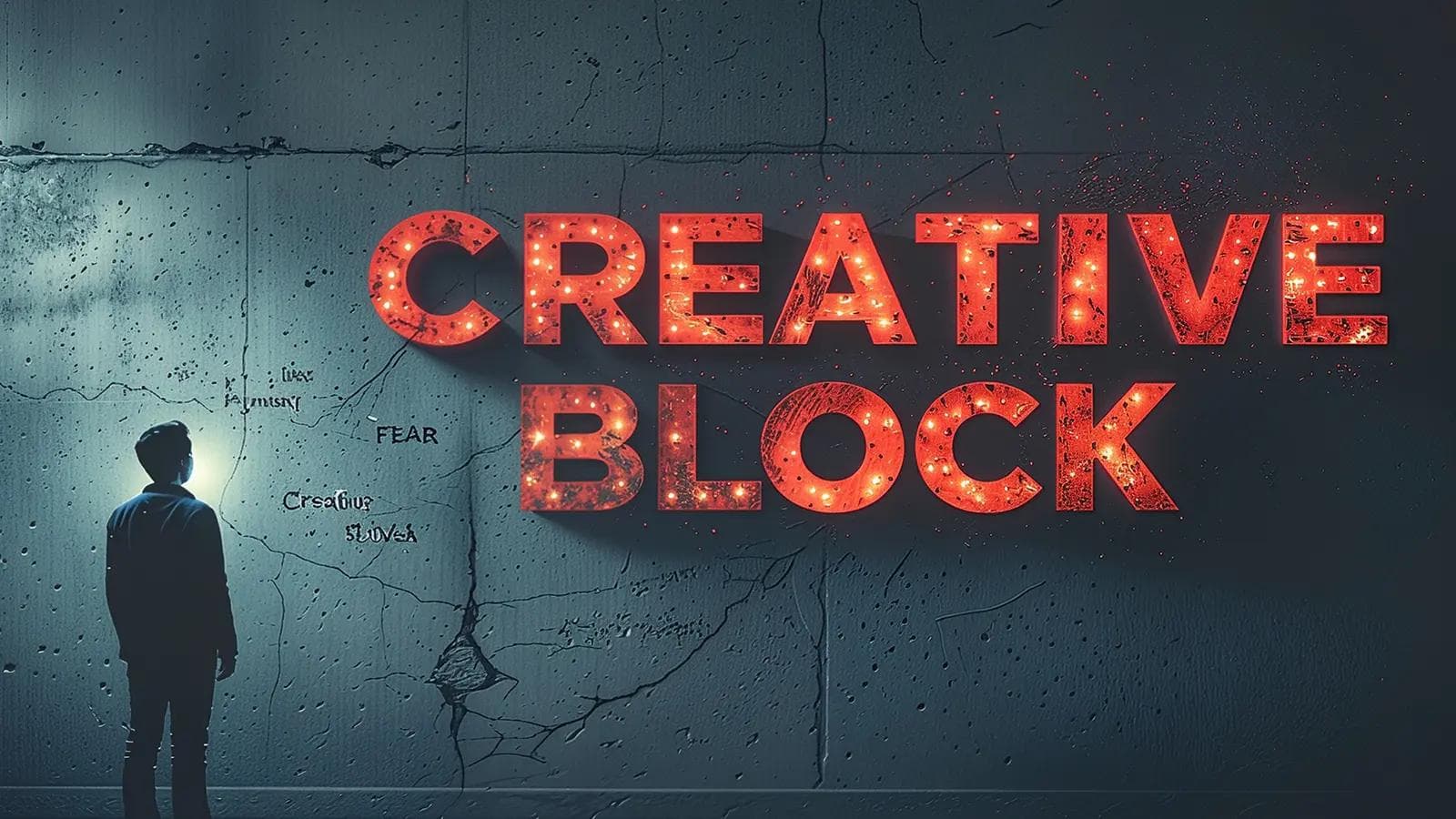
# How to Beat Creative Block: A Psychologist-Backed Guide to Getting Unstuck
Did you know that over 75% of creative professionals report experiencing creative block regularly? It feels like hitting a concrete wall—your mind, once a vibrant source of ideas, is suddenly silent and empty. It’s a terrifying, frustrating, and paralyzing experience for any writer, artist, designer, or entrepreneur.
But here’s the secret most guides won't tell you: 'Creative block' is just a symptom. It's your brain's 'check engine' light, signaling a deeper, specific issue. To truly learn how to beat creative block, you must first diagnose the root cause. You can't fix a 'Fear Block' with the same strategy you'd use for a 'Burnout Block.'
This guide introduces our Creative Block Diagnostic Framework. We'll move beyond generic advice and give you a system to identify which of the 7 common 'blockers' is holding you captive, along with specific, actionable strategies to break free and get your creative momentum back.
What Is Creative Block, Really? (And Why Does It Happen?)
From a psychological perspective, creative block is often a conflict between different parts of your brain. Your prefrontal cortex, the seat of judgment and analytical thought, can become overactive, shutting down the Default Mode Network (DMN), which is responsible for imagination, daydreaming, and connecting disparate ideas.
When you're 'in the zone' or a flow state, these brain networks work in harmony. When you're blocked, your inner critic (the prefrontal cortex) is screaming so loudly that your creative voice (the DMN) can't get a word in. The key to overcoming creative block is to quiet that inner critic and reactivate the parts of your brain responsible for novel thought.
First, Diagnose Your Block: Which of These 7 Creative Killers Is It?
Read through the symptoms of each blocker below. One or two will likely resonate more strongly than the others. That's your starting point. This is the first step in creating a targeted plan for how to beat creative block for good.
1. The Fear Block: Is Perfectionism Paralyzing You?
The Symptoms: You're afraid to start because you know your first attempt won't be perfect. The blank page or canvas is intimidating. You endlessly research and plan but never actually create because you're scared of 'ruining' the perfect idea in your head or failing to meet your own impossibly high standards.
The Solution: The '10-Minute Garbage Draft' Protocol
This technique is designed to shatter the perfectionism barrier by making the goal imperfection.
- Set a Timer: Open a new document or grab a sketchbook and set a timer for just 10 minutes.
- State the Intention: Say it out loud: "My only goal is to create the worst possible version of this idea."
- Create Garbage: Intentionally write a terrible paragraph filled with clichés. Draw a comically bad sketch. Write a chord progression that makes no sense. Don't think, just do. Let it be messy, nonsensical, and utterly awful.
- Review Without Judgment: When the timer goes off, look at what you made. You'll have accomplished two things: you started (the hardest part), and you now have raw material to work with. It's infinitely easier to edit a bad page than to stare at a blank one.
Why it works: It short-circuits the prefrontal cortex by removing the pressure of quality. You give yourself permission to be a beginner again, which is essential for any creative breakthrough.
2. The Overwhelm Block: Do You Have Too Many Ideas (Or One That's Too Big)?
The Symptoms: Your mind is buzzing. You either have a dozen exciting project ideas and can't decide which to pursue, or you have one massive goal (e.g., "write a novel," "launch a business") that's so huge you don't know where to begin. The result is the same: paralysis.
The Solution: The 'Atomization' Technique
This is about breaking a project down into its smallest possible components, or 'atoms.'
- Choose Your Project: Pick the one big idea you want to focus on.
- Brain Dump All Steps: Write down every single conceivable step, no matter how small. Don't organize them yet, just get them out of your head. For a blog post, this might include "Research keyword," "Write headline ideas," "Find three statistics," "Outline H2s," "Write intro," etc.
- Identify the 'First Atom': Look at your list and ask: "What is the absolute smallest, easiest, first physical action I can take?" It's not "Write the intro." It might be "Open a new Google Doc and title it."
- Do Only That One Thing: Your only goal for the session is to complete that single atomic task. This builds momentum and makes the project feel instantly more manageable.
This is one of the most effective creative block solutions for ambitious people. For more on structuring your work, check out our deep-work-guide.
3. The Burnout Block: Is Your Creative Well Completely Dry?
The Symptoms: You don't feel blocked; you feel empty. You're exhausted, uninspired, and apathetic. The thought of creating feels like a chore. You've been outputting constantly without taking time for input.
The Solution: A Scheduled 'Input Sabbatical'
Your brain needs new raw materials to form new connections. You cannot create from an empty tank. Schedule a half-day, full-day, or even a full week where you are forbidden from creating.
Your only job is to refill the well. Here's how to structure it:
- Visual Input: Go to an art museum, a botanical garden, or a part of your city you've never explored. Watch a visually stunning film from a director you don't know.
- Auditory Input: Listen to a new genre of music, an intellectually stimulating podcast outside your field, or simply sit in a park and listen to the sounds around you.
- Intellectual Input: Read a book from a completely different genre than you normally would. Read a long-form article about science, history, or philosophy. Learn about a new topic with no goal in mind.
Active Input vs. Passive Input: A Crucial Distinction
Not all input is created equal. To truly overcome creative block, prioritize active input.
- Active Input: This requires your engagement. It involves activities like visiting a museum, reading a challenging book, taking a walk with the specific intention of observing, or learning a new skill. It actively provides your brain with high-quality raw material.
- Passive Input: This is mindless consumption. It includes activities like scrolling through social media, binge-watching a familiar TV show, or listening to the same playlist on repeat. While relaxing, it rarely provides the novel stimuli needed to spark new ideas.
When you're burned out, your brain craves the easy dopamine of passive input, but it's the active input that will actually help you beat creative block.
4. The Comparison Block: Has 'Inspiration' Turned into Intimidation?
The Symptoms: You spend more time on Instagram, Pinterest, or Behance looking at other people's amazing work than you do creating your own. You feel a wave of despair and think, "I'll never be that good, so why bother?" Your 'inspiration' has become a source of intimidation and self-doubt.
The Solution: The 'Curated Creation' Diet
- The Unfollow Purge: Go through your social media feeds and unfollow any account that consistently makes you feel inadequate rather than inspired. Be ruthless. Your mental energy is a finite resource.
- Create Before You Consume: Make a hard rule: You are not allowed to look at anyone else's work in your field until you've put in at least 30 minutes on your own project for the day. This prioritizes your voice first.
- Build a 'Praise File': Create a folder on your computer or in your email. Every time you get a compliment, a piece of positive feedback, or feel proud of something you made, screenshot it and save it. When the comparison monster strikes, open this file to remind yourself of your own progress and worth.
5. The Logic Block: Are You Overthinking and Stifling Intuition?
The Symptoms: You're stuck in the planning phase, trying to create the 'perfect' outline or system before you start. You analyze every idea to death, pointing out all the potential flaws until the initial spark is gone. You are approaching a creative problem like an engineering problem, and it's not working.
The Solution: Embrace 'Divergent Thinking' Exercises
Your goal is to temporarily switch off the analytical brain. Try one of these exercises for 15 minutes.
- Freewriting: Open a document and start writing about your topic. Do not stop, do not edit, and do not judge. If you get stuck, just type "I am stuck" over and over until a new thought appears. The goal is to get words on the page and bypass the internal editor.
- Mind Mapping: Start with your central idea in the middle of a page. From there, draw branches out to any related word, concept, or image that comes to mind. Don't worry about structure; follow the associations wherever they lead.
- The 'What If' Game: Ask a series of absurd 'what if' questions about your project. What if the main character was a fish? What if this logo had to be designed using only circles? This pushes you out of logical ruts and into more playful, innovative territory.
6. The Monotony Block: Is Your Routine Killing Your Creativity?
The Symptoms: You feel bored and uninspired by your work. Your ideas feel stale and repetitive. You work in the same place, at the same time, in the same way, every single day. Your brain is on autopilot, and creativity requires novelty.
The Solution: The 'Pattern Interrupt'
Your brain is a prediction machine; it thrives on novelty. You need to intentionally break your patterns.
- Change Your Environment: If you always work at your desk, try working from a coffee shop, a library, or a park for a day. Even just moving to a different room in your house can help.
- Change Your Tools: If you're a writer who always uses a laptop, try writing longhand. If you're a digital artist, try painting with watercolors. Using unfamiliar tools forces your brain to solve problems in new ways.
- Change Your Timing: If you're a 'morning person,' try having a creative session late at night. Research shows you can be less inhibited and more creative when you're slightly tired. This is a powerful way to find what to do when you have creative block.
7. The Pressure Block: Is an External Deadline Stifling Your Flow?
The Symptoms: You have a major deadline or a client presentation, and the high stakes are making your mind go blank. The more you tell yourself "I have to be creative NOW," the less creative you feel. This is performance anxiety applied to the creative process.
The Solution: Decouple Effort from Outcome
Focus on the process, not the product. The Pomodoro Technique is perfect for this.
- Define a Micro-Task: Choose a tiny, non-intimidating task (e.g., "Write 5 potential headlines," not "Finish the article").
- Set a 25-Minute Timer: For the next 25 minutes, your only goal is to work on that single micro-task. You are not trying to do it 'well'; you are just trying to do it.
- Take a 5-Minute Break: When the timer rings, you must stop and step away. Stretch, get water, look out a window.
- Repeat: After four 'Pomodoros,' take a longer 15-30 minute break.
This method works because it lowers the stakes. You're not trying to create a masterpiece; you're just trying to focus for 25 minutes. The quality is a byproduct of sustained, focused effort.
How to Beat Creative Block Before It Starts: Proactive Habits
Overcoming creative block is a great skill, but avoiding it in the first place is even better. Integrate these habits into your life to keep your creative well full.
Build a Consistent Creative Habit
Creativity is a muscle. The more you use it, the stronger it gets. Don't wait for inspiration to strike. Schedule your creative work like any other important appointment. Even 15-30 minutes a day builds momentum and tells your brain that this work is a priority. For more on this, read our guide on how-to-build-creative-habits.
Create a 'Swipe File' for Inspiration
Don't rely on your memory. When you see a great design, read a beautiful sentence, or hear an interesting idea, save it. Use tools like Pinterest, Evernote, or a simple folder on your desktop. This becomes your private well of high-quality inspiration to draw from when you're feeling empty.
Prioritize Sleep and Physical Health
Your brain's health is inextricably linked to your body's health. Sleep deprivation is a known creativity killer, as it impairs the complex cognitive functions needed for novel thought. Regular exercise boosts blood flow to the brain and can often trigger ideas. Don't sacrifice your physical well-being for a deadline; it's the foundation of your mental output.
My Personal Journey with the 'Burnout Block'
Last year, I was tasked with developing a major content strategy for a new client. I worked 12-hour days for two weeks straight, completely immersing myself in their world. When it came time to present the 'big ideas,' I had nothing. My mind was a desert. I was terrified, frustrated, and felt like a fraud. This was a classic case of the Burnout Block.
Instead of pushing harder, I took my own advice. I declared an 'Input Sabbatical.' For one full day, I was forbidden from opening the project file. I went to a modern art museum, read a sci-fi novel, and took a long walk by the river without my phone. The next morning, while making coffee, three of the campaign's core concepts clicked into place almost effortlessly. I had been trying to squeeze water from a stone, when what I really needed was to go find a well.
Your Creativity Is a Skill, Not a Gift
Remember, experiencing a creative block doesn't mean you've 'lost it' or you're not a 'real' creative. It's a universal part of the process. The key is to stop treating it as a single, monolithic monster.
By using this framework to diagnose the specific type of block you're facing—Fear, Overwhelm, Burnout, or any of the others—you can apply a targeted, effective solution. Learning how to beat creative block is a skill you can develop. Now, go figure out what's holding you back, and get back to creating.
Frequently Asked Questions
There is no single cause. Creative block is a symptom of underlying issues like fear of failure (perfectionism), burnout (mental exhaustion), decision paralysis (overwhelm), or even just monotony in your routine. The key is to diagnose which specific issue is causing your block.
Creative block can last anywhere from a few hours to several months or even years. The duration often depends on the root cause and whether you take active steps to address it. A block from simple fatigue might resolve after a good night's sleep, while a block from deep burnout may require a more extended period of rest and recovery.
Yes, creative block is one of the most common symptoms of burnout. When you're burned out, you've depleted your mental and emotional resources, leaving no energy for creative thinking. This 'empty tank' feeling makes it nearly impossible to generate new ideas.
To get inspiration back, you must shift from 'output' to 'input.' Actively consume new and diverse stimuli: visit a museum, read a book outside your genre, listen to new music, or take a walk in an unfamiliar place. This provides your brain with the new raw materials it needs to form novel connections and ideas.
Written by Daily Motivation Team
Sharing motivational content to inspire your journey to success.
Related Articles
 stoic
stoicStoic Quotes on Discipline: Where Stoicism Meets Self-Mastery
Discover powerful stoic quotes on discipline from Marcus Aurelius, Seneca, and Epictetus — plus how to apply them today.
 stoic
stoicBest Stoic Quotes for Hard Times: Wisdom for Modern Struggles
Powerful Stoic quotes for hard times from Marcus Aurelius, Seneca & Epictetus — wisdom that turns adversity into strength.
 stoic
stoicBest Stoic Quotes for Beginners: Where to Start Your Practice
Discover the best stoic quotes for beginners and a simple 7-day plan to turn ancient wisdom into daily practice.
 manifestation
3 6 9 Method: A Complete Guide
Learn how the 3 6 9 method rewires your focus and turns daily journaling into a powerful manifestation ritual.