
Creative Burnout? 7 Proven Steps to Recover Your Spark
Mistaking creative burnout for a simple block? Here's a proven 7-step framework to diagnose the problem, recover your energy, and find your spark a...
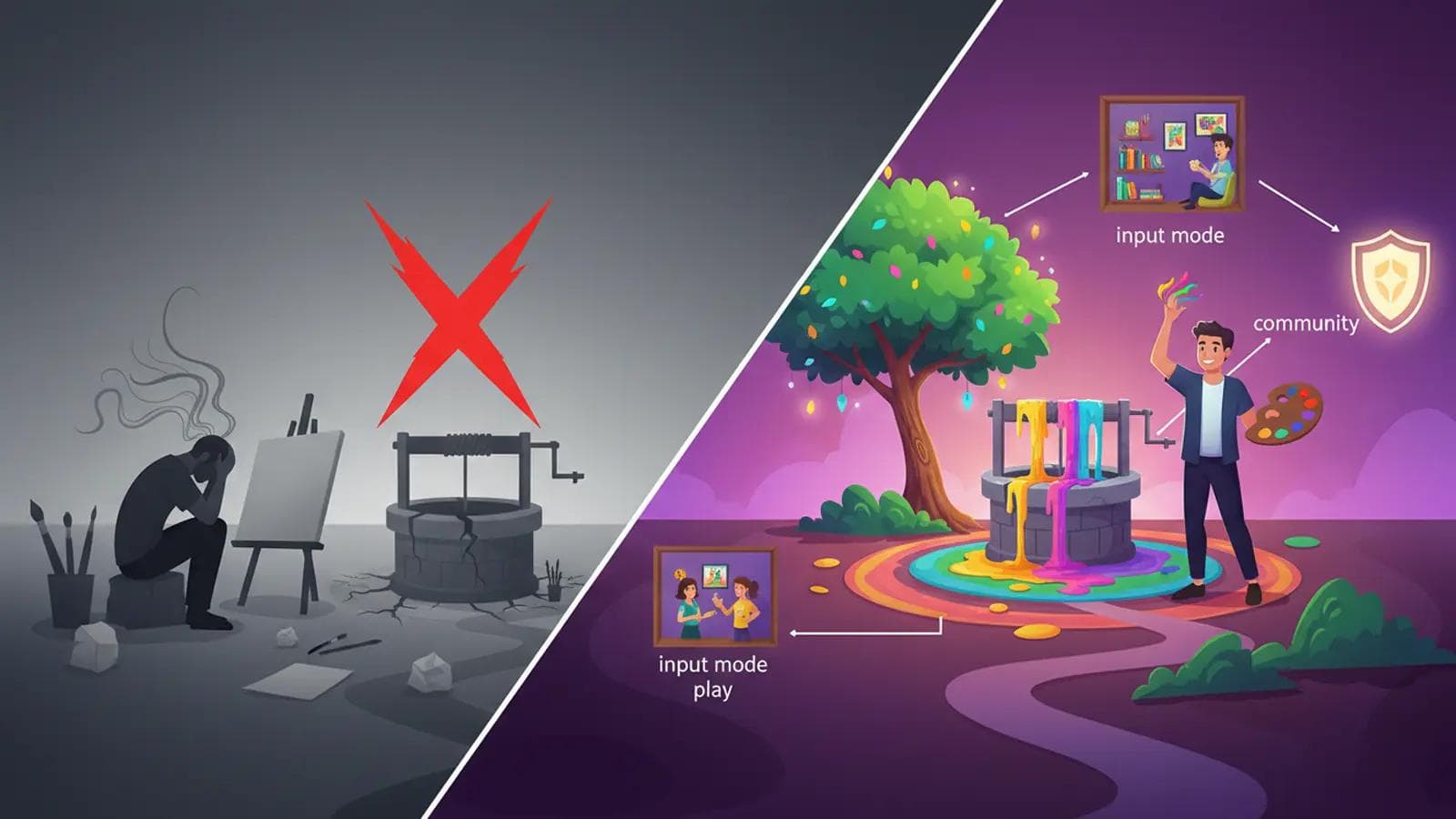
A recent study found that over 75% of creative professionals have experienced burnout, but what's shocking is how many mistake it for a simple creative block. You used to leap out of bed, buzzing with ideas. Now, the thought of facing your canvas, your code, or your blank page fills you with a quiet, persistent dread. This isn't just a block; it's creative burnout, a state of deep emotional, physical, and mental exhaustion that can make you question your entire identity as a creator.
I've been there. I once spent three weeks staring at a blinking cursor, convinced my career was over. The truth is, your creative well isn't broken—it's just empty. You've been in non-stop 'output mode,' pouring everything you have into your work without refilling your own reserves. This guide is the step-by-step framework I used to recover. It will help you diagnose the problem, systematically refill your well, and build sustainable habits to prevent creative burnout from derailing you again.
What Exactly Is Creative Burnout?
Creative burnout is a specific form of occupational burnout characterized by three core symptoms, as defined by the World Health Organization:
- Profound Creative Exhaustion: A feeling of being mentally drained, depleted, and unable to muster the energy to start or continue creative work.
- Cynicism and Detachment: A growing sense of negativity or indifference towards your creative practice. You might think, "What's the point?" or feel disconnected from work you once loved.
- Reduced Professional Efficacy: A creeping belief that you're no longer good at what you do. You lose confidence in your skills and feel like an imposter, despite past successes.
It's a systemic issue, not a personal failing. It happens when the demands of creative output consistently outweigh the resources for creative input, rest, and recovery.
Creative Burnout vs. Writer's Block: What's the Difference?
Many creators confuse these two, but understanding the distinction is critical for recovery. Treating burnout like a simple block will only make it worse.
- Creative Block:
- Scope: Usually project-specific. You're stuck on a particular chapter, design, or problem.
- Feeling: Frustration, feeling stuck. You want to work but can't find the right idea.
- Solution: Often solved with tactical fixes like brainstorming, changing your environment, or taking a short break.
- Creative Burnout:
- Scope: Global and existential. It affects your entire creative practice and identity.
- Feeling: Apathy, dread, exhaustion. You have a deep-seated lack of desire or energy to create anything.
- Solution: Requires a holistic approach focusing on rest, recovery, and systemic changes to your work habits and lifestyle.
What Are the Early Warning Signs of Creative Burnout?
Recognizing the symptoms early can help you take action before you're completely depleted. Creative burnout doesn't happen overnight; it's a slow fade. Watch for these common red flags.
Physical and Emotional Exhaustion
You feel tired all the time, even after a full night's sleep. This isn't just normal tiredness; it's a bone-deep weariness that caffeine can't fix. You might also experience increased anxiety, irritability, or a persistent low mood.
Lack of Inspiration and Motivation
Your usual sources of inspiration feel dull and uninteresting. The idea of starting a new project, which once excited you, now feels like an insurmountable chore. You find yourself procrastinating more than ever.
Increased Cynicism and Negativity
You start to feel detached from your work and your creative community. You might find yourself being overly critical of your own work and the work of others, or feeling that your creative pursuits are pointless.
Physical Symptoms
Chronic stress from burnout can manifest physically. Pay attention to new or worsening headaches, stomach issues, or a weakened immune system that leads to getting sick more often.
How to Recover from Creative Burnout: A 7-Step Framework
Recovering from creative burnout requires more than a long weekend. It demands a conscious, structured approach to rest and replenishment. Follow these seven steps to reclaim your creative spark.
Step 1: Declare a True Creative Sabbatical
This is the most critical and difficult step. You must give yourself permission to stop completely. This isn't quitting; it's strategic recovery.
- The Rule: For a minimum of 7 consecutive days, you are not allowed to engage in your primary creative work. No "just checking emails," no "quick sketches," no "jotting down one idea."
- Action Plan: Announce your break. Set an out-of-office reply. Tell your clients or collaborators you are offline. The goal is to remove all external and internal pressure to produce. This signals to your nervous system that it's safe to power down.
Step 2: Curate Your "Inspiration Diet"
Burnout happens from a deficit of input. Your job during recovery is to become a voracious, non-judgmental consumer of art and experiences. This is not optional; it is the work.
- The Rule: Dedicate 90-120 minutes every day of your sabbatical to active input. The key is to consume things completely unrelated to your field.
- Action Plan: Create an "Inspiration Menu." Here are some ideas:
- If you're a writer, visit a sculpture garden.
- If you're a graphic designer, read a book of poetry.
- If you're a musician, watch a classic silent film.
- Take a "sensory walk" and only focus on what you can smell for 15 minutes.
- Re-read the books or re-watch the movies that made you want to be a creator in the first place.
Step 3: Conduct a Ruthless Energy Audit
Your creative energy is a finite resource. You need to identify and plug the leaks. Get out a notebook and be brutally honest.
- The Rule: Identify the top 3-5 "energy vampires" in your creative life.
- Action Plan: Create three lists:
- Draining Projects: Which projects fill you with dread? Is it a specific client? A type of work you hate doing?
- Draining People: Who leaves you feeling exhausted after a conversation? Is it a hyper-critical colleague, a negative family member, or a demanding client?
- Draining Habits: What are your energy-killing routines? Endless social media scrolling? Comparing your work to others? Saying "yes" to every request? how-to-set-boundaries
Once identified, your mission is to eliminate, automate, or minimize one item from each list within the next month. This is how you stop the cycle of recovering from creative burnout only to fall right back in.
Step 4: Re-engage with Low-Stakes Creation
After your 7-day sabbatical, the pressure to create something "good" can be paralyzing. The solution is to make the stakes so low they're practically on the floor.
- The Rule: Your first creative acts must be pointless, private, and imperfect.
- Action Plan: The 10-Minute Garbage Challenge. For 10 minutes, set a timer and intentionally create the worst thing you possibly can. Write a paragraph of clichés. Draw a stick figure with incorrect proportions. The goal is to sever the connection between your creative act and a valuable outcome. It's about remembering the physical sensation of creating without the pressure of performance.
Step 5: Schedule Unstructured "Play"
As adults, we see play as a luxury. For creators, it's a necessity. Play is the engine of divergent thinking and novel ideas.
- The Rule: Schedule at least two 1-hour "play appointments" with yourself each week.
- Action Plan: Play must have no goal other than enjoyment. It's not about self-improvement or creating a marketable skill. Try these:
- Build a LEGO set without instructions.
- Go to a park and swing on the swings.
- Finger paint.
- Follow a YouTube tutorial for a dance you'll never perform.
- Explore a new neighborhood in your city without a map.
This is a crucial step in preventing creative burnout long-term. It teaches your brain that it's okay to do things just for the joy of it, refilling a different part of your well.
Step 6: Rebuild Your Creative Systems
Willpower is unreliable, especially when you're recovering. You need to build a scaffolding of systems and routines that protect your creative energy.
- The Rule: Design your environment and schedule to make creative health the default option.
- Action Plan:
- Time Blocking: Schedule your creative work, your input time, and your rest time on your calendar as non-negotiable appointments.
- Set Boundaries: Create clear start and end times for your workday. When you're done, you're done. No checking work emails from bed. work-life-balance-tips
- The "Done" List: At the end of each day, write down what you accomplished, not what's left on your to-do list. This helps combat feelings of inadequacy.
Step 7: Reconnect With Your "Why"
Burnout disconnects you from your purpose. The final step of recovery is to intentionally remember why you started this creative journey in the first place.
- The Rule: Spend time consciously reflecting on your core creative mission.
- Action Plan: Journaling Prompts. Spend 20 minutes writing answers to the following:
- "Describe the moment you first knew you wanted to be a [writer, artist, designer, etc.]. What did it feel like?"
- "If money and judgment were no object, what is the one project you would create right now?"
- "Who is the one person (real or fictional) you hope to impact with your work? Write a letter to them."
This process anchors you to your intrinsic motivation, which is the most powerful antidote to the external pressures that often cause artist burnout.
How Long Does Creative Burnout Last?
There is no magic number, and recovery is not linear. For mild cases, a dedicated week or two of implementing the steps above can make a significant difference. For severe, long-term creative burnout, recovery can take several months.
Be patient with yourself. Some days you'll feel a rush of inspiration, and the next you might feel empty again. This is normal. The goal is not a dramatic, overnight transformation but a gradual, upward trend in your energy, motivation, and joy. Trust the process and focus on consistent, small actions.
Conclusion: Your Creativity is a Garden, Not a Factory
Treating yourself like a machine is what leads to creative burnout. A factory is expected to produce at maximum capacity, 24/7. But a garden has seasons. It needs periods of sunlight (input), periods of watering (play), and periods of lying fallow (rest) to produce something beautiful.
You are not broken. You are a creator in a fallow season. By giving yourself permission to rest, intentionally seeking inspiration, setting boundaries, and reconnecting with your purpose, you can navigate this season and emerge with deeper roots and a more sustainable creative practice. Your spark isn't gone—it's just waiting for you to tend the garden.
Frequently Asked Questions
Creative burnout is a state of exhaustion stemming from prolonged stress; you lack the mental and emotional capacity to create, even if you want to. Laziness is a lack of willingness or motivation to act, despite having the capacity. Burnout feels like an empty tank, while laziness is choosing not to turn the key.
Recovery time varies. Mild burnout might be alleviated in a few weeks with intentional rest and new habits. Severe, long-term burnout can take several months to fully recover from. The key is consistent effort in recovery, not speed.
While it can feel that way, creative burnout is not typically permanent. However, if the underlying causes—such as overwork, lack of rest, and chronic stress—are not addressed, you can get stuck in a cycle of burnout. True recovery requires changing the systems and habits that led to it.
Creative burnout is a specific manifestation of 'burn-out,' which the World Health Organization (WHO) recognizes as an 'occupational phenomenon.' While not classified as a medical condition itself, it is a legitimate state of exhaustion with serious impacts on mental and physical health.
Written by Daily Motivation Team
Sharing motivational content to inspire your journey to success.
Related Articles
 stoic
stoicStoic Quotes on Discipline: Where Stoicism Meets Self-Mastery
Discover powerful stoic quotes on discipline from Marcus Aurelius, Seneca, and Epictetus — plus how to apply them today.
 stoic
stoicBest Stoic Quotes for Hard Times: Wisdom for Modern Struggles
Powerful Stoic quotes for hard times from Marcus Aurelius, Seneca & Epictetus — wisdom that turns adversity into strength.
 stoic
stoicBest Stoic Quotes for Beginners: Where to Start Your Practice
Discover the best stoic quotes for beginners and a simple 7-day plan to turn ancient wisdom into daily practice.
 manifestation
3 6 9 Method: A Complete Guide
Learn how the 3 6 9 method rewires your focus and turns daily journaling into a powerful manifestation ritual.