
Essential Beginner Gym Guide to Beat Gym Anxiety
Feeling lost at the gym? This step-by-step beginner gym guide gives you the exact plan to walk in with confidence and get real results.
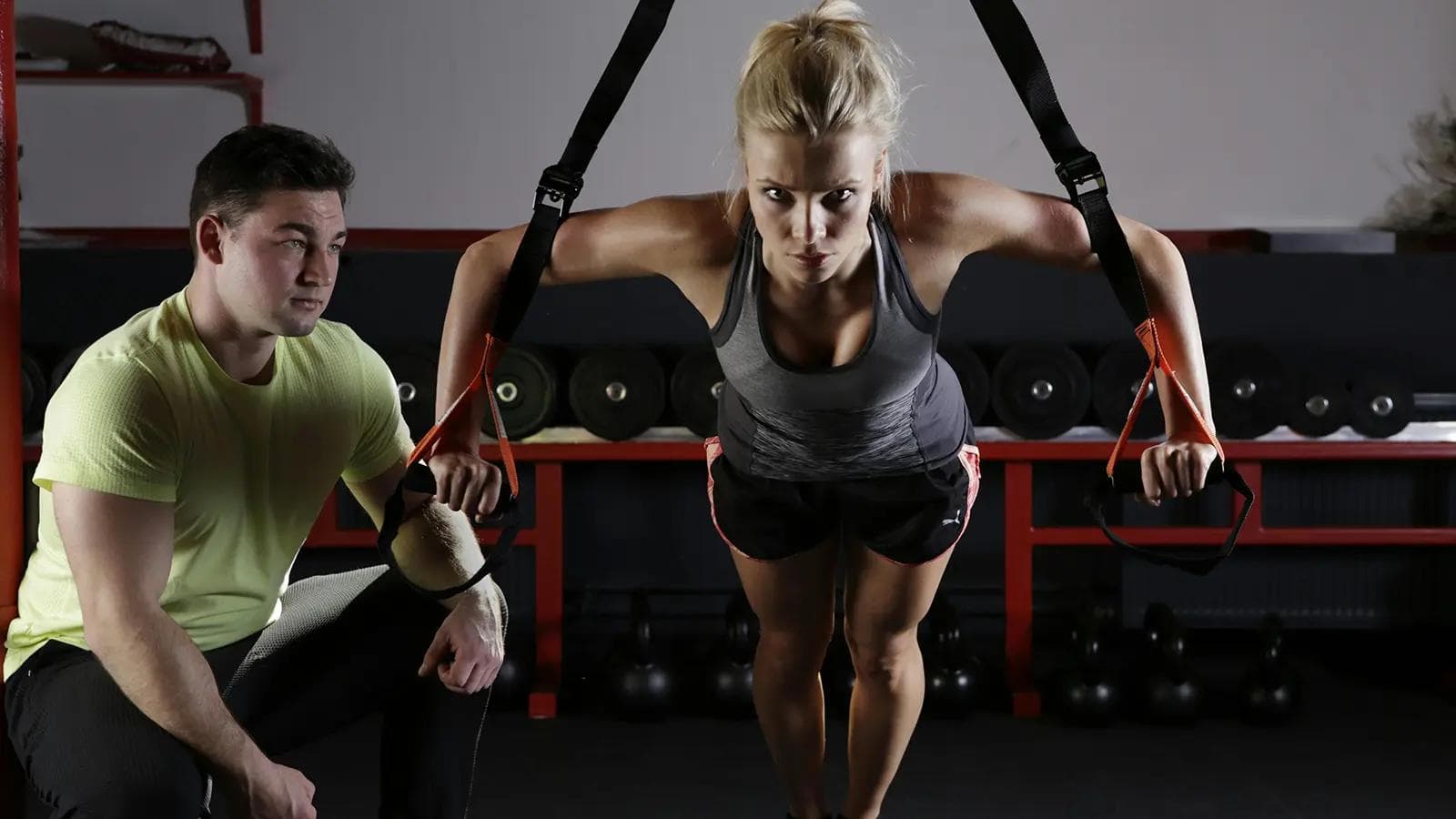
The Complete Beginner Gym Guide: From Your First Day to Your First Results
Did you know that nearly 67% of gym memberships go completely unused? You've taken the first step—buying the membership and the gear—but now you're facing the real challenge: walking through the door without feeling like every single person is watching you. This feeling, often called 'gymtimidation,' is the number one reason people abandon their fitness goals before they even start.
This is not just another list of generic tips. This is the most comprehensive beginner gym guide you'll find, designed to be your step-by-step blueprint. We'll give you an exact plan for your first three visits, a full 4-week workout program, and the unwritten rules of gym etiquette so you can walk in with unshakeable confidence and start seeing results.
Why Does Going to the Gym Feel So Hard at First?
The anxiety you're feeling is real, but it's also predictable. It stems from a few key psychological triggers that almost every gym beginner experiences. Understanding them is the first step to overcoming them.
The 'Spotlight Effect' is Lying to You
Your brain is telling you that a giant spotlight is following you from the locker room to the treadmill, highlighting every mistake. This is a psychological phenomenon called the "Spotlight Effect," where we overestimate how much others are noticing our appearance or actions.
The truth is much more boring:
- They're focused on their own pain. That person grunting in the corner isn't judging your squat form; they're just trying to survive their last set.
- They're on their phone. A quick scan of any gym floor proves that most people are more interested in their playlist or social media feed than your workout.
- They're worried about themselves. Confidence is often a facade. Many experienced gym-goers are still self-conscious and are just as worried that you're watching them.
Information Overload and Decision Paralysis
A modern gym is a sea of complex machines, strange-looking bars, and equipment with no instructions. When you don't have a plan, you wander aimlessly, which makes you feel lost and exposed. This decision paralysis is a major trigger for anxiety. A clear plan, like the one in this gym guide for beginners, acts as your shield.
Your Pre-Gym Checklist: How to Prepare for Your First Visit
Confidence starts before you even leave the house. Proper preparation removes the small points of friction and uncertainty that can derail your motivation. Don't skip this step.
What Should I Wear to the Gym?
Comfort and function are key. You don't need expensive brands, but you do need the right materials.
- Fabric: Choose moisture-wicking fabrics like polyester, nylon, or spandex. Avoid 100% cotton, as it absorbs sweat, becomes heavy, and can cause chafing.
- Fit: Wear something that allows for a full range of motion. You should be able to squat, stretch, and move without feeling restricted.
- Footwear: This is non-negotiable. Get a pair of comfortable, supportive athletic shoes. Running shoes are fine for general use, but if you plan on lifting weights, a flatter, more stable training shoe is ideal.
What to Pack in Your Gym Bag: The Essentials
- Water Bottle: Hydration is critical. Don't rely on the water fountain.
- Towel: One small towel for wiping down equipment (good etiquette!) and a larger one if you plan to shower.
- Headphones: Your personal bubble. Music can significantly boost motivation and block out distractions.
- Lock: Protect your valuables in the locker room.
- Your Workout Plan: Have it written down in a notebook or on your phone. This is your map.
How Do I Start Working Out at the Gym for the First Time?
Your first visit shouldn't be about getting an intense workout. It's about building familiarity and comfort. We've developed a unique framework for this: The 3-Visit Onboarding Plan. This structured approach makes starting at the gym manageable and anxiety-free.
Visit 1: The Cardio & Layout Tour (30 Minutes)
The only goal for today is to learn the space. No pressure, no complex movements.
- Check-in: Get comfortable with the front desk and scanning your card.
- Find the Locker Room: Secure your belongings.
- Pick a Cardio Machine: Head to the treadmill, stationary bike, or elliptical. These are the most straightforward pieces of equipment.
- Start Moving: Put your headphones in and walk or cycle at a low intensity for 20-25 minutes.
- Observe: While you're on the machine, scan the gym. Where are the dumbbells? Where are the weight machines? Where are the stretching areas and water fountains? You're de-mystifying the environment.
- Cool Down & Leave: Do a 5-minute stretch. That's it. You've successfully completed your first day.
Visit 2: The Machine Introduction (45 Minutes)
Today, you'll build on your confidence by learning a few simple, guided-motion machines. These are great for beginners because they have a fixed path, which helps you learn the correct form safely.
- 5-10 Minute Warm-up: Use the same cardio machine as last time.
- Find 3-4 Machines: Pick machines that look intuitive. Good choices include the Leg Press, Chest Press, Lat Pulldown, and Seated Row.
- Read the Instructions: Every machine has a small placard showing how to use it and what muscles it targets.
- Perform 2-3 sets of 10-12 reps: Choose a very light weight. The goal is to feel the movement, not to exhaust yourself.
- Cool Down: 5-minute stretch.
Visit 3: The Free Weight Foundation (45-60 Minutes)
Now you're familiar with the gym's layout and basic movements. It's time to introduce free weights, which are essential for building functional strength. Find the dumbbell rack.
- 5-10 Minute Warm-up: Cardio machine of your choice.
- Find a Bench and Light Dumbbells: Grab a pair of 5-10 lb dumbbells.
- Perform Your First Free Weight Workout: Try the beginner workout plan outlined in the next section.
- Focus on Form: If you're unsure, watch a quick video tutorial on your phone for each exercise. No one will notice.
- Cool Down & Stretch.
By the end of these three visits, the gym will no longer be an intimidating, alien space. It will be your space.
A Complete Beginner Gym Workout Plan (The First 4 Weeks)
This is the ultimate beginner gym workout to get you started. It's a full-body routine that you should perform 2-3 times per week on non-consecutive days (e.g., Monday, Wednesday, Friday). This allows your muscles time to recover and grow.
The Workout:
- Warm-up (5-10 minutes): Light cardio (treadmill walk, stationary bike).
- Goblet Squats (Dumbbell): 3 sets of 8-12 reps. (Targets: Quads, Glutes, Core)
- Dumbbell Bench Press: 3 sets of 8-12 reps. (Targets: Chest, Shoulders, Triceps)
- Single-Arm Dumbbell Rows: 3 sets of 10-12 reps per arm. (Targets: Back, Biceps)
- Dumbbell Overhead Press (Seated): 3 sets of 8-12 reps. (Targets: Shoulders, Triceps)
- Plank: 3 sets, hold for 30-60 seconds. (Targets: Core)
- Cool-down (5-10 minutes): Full-body stretching.
Key Principles for Success:
- Rest: Take 60-90 seconds of rest between each set.
- Progressive Overload: This is the secret to getting stronger. Each week, try to do one more rep or increase the weight slightly. Your goal is to challenge yourself, not just go through the motions. For more advanced plans, check out our dumbbell-only-workout-for-strength guide.
- Consistency Over Intensity: Showing up and doing something is infinitely better than doing one perfect, intense workout and then quitting for a month.
Understanding Gym Equipment: Machines vs. Free Weights for Beginners
One of the most confusing parts of any beginner gym guide is knowing what equipment to use. The two main categories are machines and free weights (dumbbells, barbells, kettlebells). Here’s how they compare for a beginner.
Weight Machines
- Pros: They have a fixed movement path, which makes them safer and easier to learn. They are excellent for isolating specific muscle groups.
- Cons: Because they stabilize the weight for you, they don't engage as many small stabilizer muscles. The fixed path may not fit all body types perfectly.
- Best for: Learning a new movement pattern and safely targeting a specific muscle without worrying about balance.
Free Weights (Dumbbells & Barbells)
- Pros: They force you to control the weight, which builds crucial stabilizer muscles and improves balance and coordination. The movements are more applicable to real-life activities (functional strength).
- Cons: There is a higher risk of injury if your form is incorrect. They have a steeper learning curve.
- Best for: Building overall strength, improving body coordination, and long-term progress.
The Verdict for Beginners: Start with a mix! Use machines for the first 1-2 weeks to learn the basic movements (like a chest press or leg press). Then, incorporate the dumbbell-based beginner workout plan above. This combination provides the perfect balance of safety and effectiveness.
What is Proper Gym Etiquette? (The Unwritten Rules)
Nothing screams "beginner" more than breaking the gym's unwritten social rules. Knowing these will instantly boost your confidence and help you feel like you belong.
- Re-rack Your Weights: Always put your dumbbells, plates, and attachments back where you found them. This is the #1 rule of the gym.
- Wipe Down Equipment: No one wants to sit in your sweat. Use the provided spray and paper towels to wipe down benches, seats, and handles after you use them.
- Don't Hog Equipment: If you're resting between sets, let others "work in" with you, especially on popular machines. Don't sit on a machine scrolling through your phone for 5 minutes.
- Respect Personal Space: Don't stand too close to someone while they are lifting. Give them a clear bubble of space to move safely.
- Keep the Noise Down: Grunting with effort is fine. Screaming or dropping weights excessively from a high distance is not.
- Ask for a Spotter Correctly: If you need help with a heavy lift (like a barbell bench press), politely ask someone nearby. Be clear about how much help you need. For more details, see our guide on how-to-ask-for-a-spot.
Fueling Your Progress: Simple Nutrition for Gym Beginners
You can't out-train a bad diet. While nutrition is a complex topic, beginners should focus on three simple things:
- Hydration: Drink water before, during, and after your workout. Dehydration can decrease your performance by up to 30%.
- Protein: Protein is essential for repairing and building muscle. Aim to include a source of protein (chicken, fish, eggs, tofu, protein shake) in the meal after your workout.
- Energy (Carbohydrates): Your body needs fuel to perform. Eating a source of complex carbohydrates (oats, brown rice, whole wheat bread) 1-2 hours before your workout will give you the energy you need.
Don't overcomplicate it. Focus on these basics, and you'll have the fuel you need to make progress.
Your Journey Starts Now
This beginner gym guide has given you the tools, the plan, and the knowledge to conquer the gym. Remember that every single person in that room was a beginner once. They all had a Day 1. The key is to focus on your own journey, celebrate small wins (like simply showing up for all 3 onboarding visits), and stay consistent.
Stop waiting for the perfect moment. Your confidence won't come from reading guides; it will come from taking action. Take the plan from this guide, pack your bag, and walk through those doors. You've got this.
Frequently Asked Questions
A beginner should aim for 2-3 days a week. This frequency allows your body enough time to recover and adapt between workouts, which is crucial for building muscle and preventing burnout. Consistency is more important than intensity when you're starting out.
On your first day, focus on familiarization, not intensity. Plan to be there for just 30-45 minutes. Do a light 15-20 minute cardio session on a treadmill or bike, and use the rest of the time to walk around and learn the gym's layout. This 'scout mission' reduces anxiety for future visits.
A beginner's workout, including warm-up and cool-down, should last between 45 and 60 minutes. This is enough time to effectively work all major muscle groups without causing excessive fatigue or overtraining, which can lead to injury or discouragement.
For most beginners whose goal is to build strength and muscle, it's better to do weights first. You have the most energy at the start of your workout, which allows you to lift with better form and intensity. Use cardio as a 5-10 minute warm-up before weights, and save any longer cardio sessions for after your lifting or for separate days.
Written by Daily Motivation Team
Sharing motivational content to inspire your journey to success.
Related Articles
 Creativity
Artistic Inspiration: A Complete Guide
Artistic inspiration isn't luck — it's a trainable skill. Learn 7 daily practices that keep ideas flowing.
 stoic
stoicStoic Quotes on Discipline: Where Stoicism Meets Self-Mastery
Discover powerful stoic quotes on discipline from Marcus Aurelius, Seneca, and Epictetus — plus how to apply them today.
 stoic
stoicBest Stoic Quotes for Hard Times: Wisdom for Modern Struggles
Powerful Stoic quotes for hard times from Marcus Aurelius, Seneca & Epictetus — wisdom that turns adversity into strength.
 stoic
stoicBest Stoic Quotes for Beginners: Where to Start Your Practice
Discover the best stoic quotes for beginners and a simple 7-day plan to turn ancient wisdom into daily practice.