
Networking for Introverts: 7 Strategies to Build Connections
Introverts can be master networkers. Skip the loud events and small talk. Use these 7 authentic strategies to build powerful professional relationships.
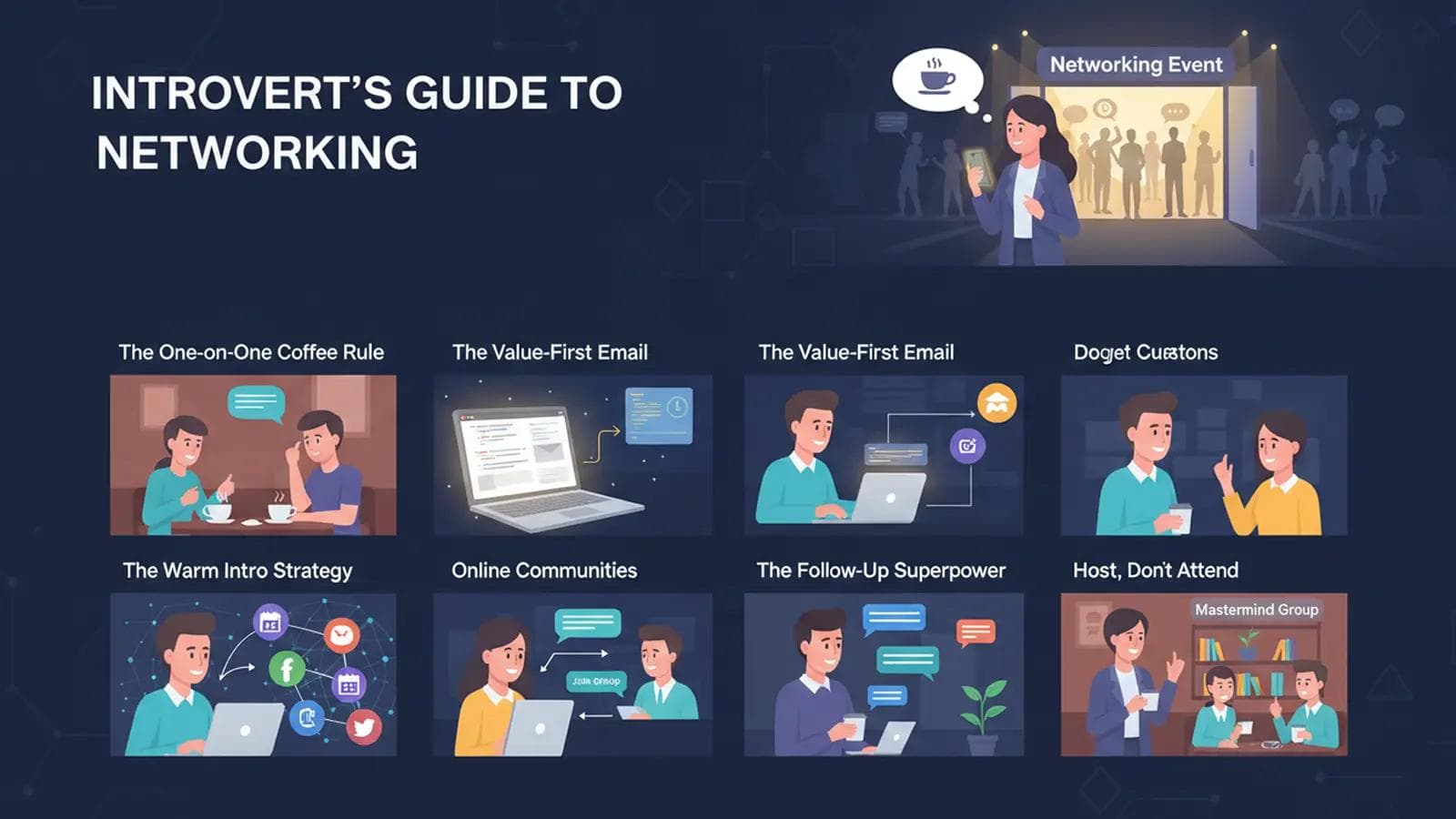
Introduction: "You should go to that networking event tonight!" Your extroverted friend is excited. You're filled with dread. The thought of walking into a room full of strangers, making small talk, and handing out business cards makes you want to hide under your desk. Here's the truth: you're not bad at networking. You're just trying to network like an extrovert, and it's exhausting. This guide will show you how to build powerful professional relationships in ways that work for your introverted brain.
Why Traditional Networking Fails Introverts
Traditional networking is designed by and for extroverts:
- Large, loud events
- Rapid-fire conversations with strangers
- Surface-level small talk
- Immediate value exchange
For introverts, this is hell. Introverts aren't antisocial—they're selectively social. They prefer:
- Small, intimate conversations
- Depth over breadth
- Meaningful relationships over large networks
- Time to think before speaking
The good news? Introverted networking is often more powerful than extroverted networking. Why? Because introverts build fewer, deeper relationships. And in business, 10 deep relationships beat 100 shallow ones.
Strategy 1: The "One-on-One Coffee" Rule
Skip the 200-person networking event. Instead, reach out to 5-10 people you admire and invite them for a one-on-one coffee (or Zoom call).
The Script: "Hi [Name], I'm [Your Name] and I'm working on [Your Field/Project]. I've been following your work on [Specific Thing They Did], and I'd love to learn from your experience. Would you be open to a 20-minute coffee chat sometime next week? I'd be happy to buy you a coffee (or send you a gift card if it's virtual)."
Why This Works for Introverts:
- You're in control. It's one person, not a crowd.
- You can prepare questions in advance.
- It's a deep, meaningful conversation, not small talk.
The 20-Minute Rule: Always say "20 minutes." This respects their time and lowers the barrier. If the conversation is great, it will naturally go longer.
Strategy 2: The "Value-First" Email
Introverts hate "asking for favors" from strangers. So don't. Give first.
The Formula:
- Find someone you want to connect with (a potential mentor, partner, or customer).
- Create something valuable for them (before you ever contact them).
- Send it with zero expectations.
Example: You want to connect with the founder of a SaaS company. You notice their website is slow. You run a speed test, take screenshots, and write a 2-page doc with 5 specific recommendations to improve load time. You email it to them: "Hi [Name], I'm a developer and a fan of your product. I noticed your site was running slow, so I did a quick audit. Here are 5 fixes that could improve load time by 40%. No charge, no strings attached. Hope this helps!"
The Result: They reply. They're impressed. You've started a relationship based on value, not "What can you do for me?"
Strategy 3: Online Communities > In-Person Events
Introverts thrive in written communication. Use this to your advantage.
Where to Go:
- Niche Slack groups, Discord servers, or Circle communities
- Reddit communities in your field
- LinkedIn groups
- Twitter (now X) threads
How to Network Online (The Right Way):
- Lurk First: Spend a week observing. Learn the culture, the key players, and the topics that get engagement.
- Add Value: Don't promote yourself. Answer questions. Share resources. Help people solve problems.
- Build in Public: Share your own journey. Post about what you're building, what you're learning, and where you're stuck. Authenticity attracts.
After 2-3 weeks of consistent, helpful participation, you'll have built credibility. People will reach out to you.
Strategy 4: The "Warm Intro" Strategy
Cold outreach is hard. Warm intros are easy.
How It Works: Instead of reaching out cold to someone you want to meet, find a mutual connection and ask for an introduction.
The Process:
- Identify who you want to meet (Person B).
- Use LinkedIn to find mutual connections (Person A).
- Message Person A: "Hi [Person A], I see you know [Person B]. I'm working on [Project] and I'd love to get their advice on [Specific Topic]. Would you be comfortable making an intro?"
Why This Works: A warm intro is 10x more likely to get a response than a cold email. You're leveraging trust that already exists.
Strategy 5: The "Follow-Up" Superpower
Most people meet someone once and never follow up. Introverts can use this to their advantage by being the rare person who does.
The Follow-Up Formula: Within 24 hours of meeting someone (at an event, a coffee, or online), send a follow-up message:
"Hi [Name], it was great meeting you today. I really enjoyed our conversation about [specific topic]. I thought you'd find this article/podcast/resource interesting: [link]. Let's stay in touch!"
Why This Works:
- You're reminding them who you are while the memory is fresh.
- You're adding value (the resource link).
- You're planting a seed for a future relationship.
The 30-Day Rule: Set a reminder for 30 days later. Send another message. Share an update on what you're working on or something relevant to their interests. This keeps the relationship warm without being pushy.
Strategy 6: Host, Don't Attend
Instead of attending events where you're one of 100 attendees, host small, curated events where you're the organizer.
Examples:
- A monthly "Founders Coffee" (invite 5-6 local entrepreneurs).
- A virtual "Mastermind" group (4-6 people in your industry meet weekly on Zoom).
- A small dinner party (invite 6-8 interesting people you want to know better).
Why This Works for Introverts:
- You control the guest list (small, curated, intentional).
- You have a role (host), which gives you a purpose and reduces social anxiety.
- People remember the person who brought them together.
Strategy 7: The "Content" Strategy (Be a Magnet, Not a Hunter)
Instead of chasing people, create content that attracts them to you.
How to Do It:
- Write: Start a blog, newsletter, or LinkedIn long-form posts about your industry, lessons you're learning, or problems you're solving.
- Speak: Give a talk at a conference (even a small local one) or host a webinar.
- Teach: Create a free course, workshop, or YouTube series.
Why This Works: When you create valuable content, the right people find you. They reach out. You've established credibility before the first conversation. This is "inbound" networking, and it's perfect for introverts.
Example: Instead of attending 10 networking events, spend that time writing 10 high-quality blog posts. Each post is a "networking event" that works 24/7, attracting the right people to you while you sleep.
Reframe: You're Not "Bad" at Networking
You're not bad at networking. You're just bad at extroverted networking. Introverted networking is:
- Depth over breadth
- Quality over quantity
- Authentic relationships over transactional exchanges
- Online and one-on-one over loud and large
These are not weaknesses. These are superpowers in a world drowning in shallow connections.
Conclusion: Your Network, Your Way
Stop forcing yourself into uncomfortable networking events. Build your network on your terms—one coffee at a time, one helpful email at a time, one piece of valuable content at a time. The goal isn't to know everyone. The goal is to know the right people deeply. That's how introverts win.
Frequently Asked Questions
Start smaller. Comment on someone's LinkedIn post or reply to their tweet. Engage with their content publicly first. After 2-3 interactions, sending a DM or email will feel more natural because they've already "seen" you.
Don't take it personally. Successful people get 100+ requests per week. Try again in 3 months, or try a different approach (like sending value first with no ask). Persistence with respect is key.
Quality over quantity. Aim for 10-15 meaningful relationships in your industry. These are people you check in with quarterly, help when you can, and who would go out of their way to help you. 10 deep allies beat 500 LinkedIn connections.
Written by Daily Motivation Team
Sharing motivational content to inspire your journey to success.
Related Articles
 Creativity
Artistic Inspiration: A Complete Guide
Artistic inspiration isn't luck — it's a trainable skill. Learn 7 daily practices that keep ideas flowing.
 stoic
stoicStoic Quotes on Discipline: Where Stoicism Meets Self-Mastery
Discover powerful stoic quotes on discipline from Marcus Aurelius, Seneca, and Epictetus — plus how to apply them today.
 stoic
stoicBest Stoic Quotes for Hard Times: Wisdom for Modern Struggles
Powerful Stoic quotes for hard times from Marcus Aurelius, Seneca & Epictetus — wisdom that turns adversity into strength.
 stoic
stoicBest Stoic Quotes for Beginners: Where to Start Your Practice
Discover the best stoic quotes for beginners and a simple 7-day plan to turn ancient wisdom into daily practice.